How to Spot Category Cannibalization in Fashion

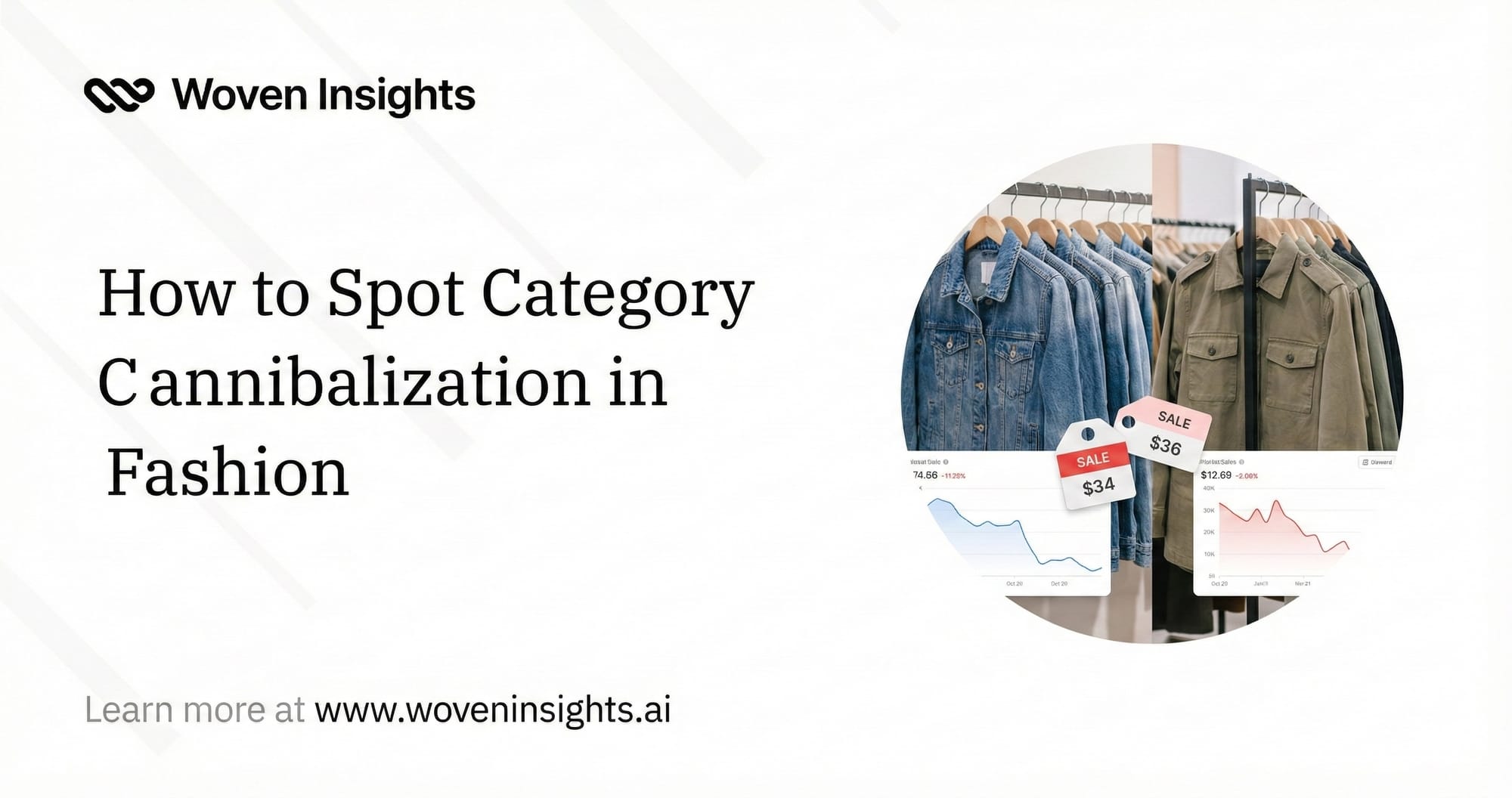
Category growth is rarely linear In fashion retail. When one category suddenly spikes, it often feels like a win until you dig deeper and realize that the growth didn’t come from new customers or expanded demand. Instead, the rise of one category quietly eroded the performance of another.
That shift is called category cannibalization, and while it’s common, it’s one of the hardest issues for teams to detect early without data.
Cannibalization doesn’t always look like a problem at first. A new trend takes off, revenue climbs, and KPIs look healthy on the surface. But behind the scenes, you may be losing margin, diluting product focus, and unintentionally shifting customer behavior in ways that weaken your overall assortment.
Here’s a detailed look at how cannibalization happens, what warning signs to watch, and how data can help retailers prevent one category from stealing the oxygen from another.
What Is Category Cannibalization?
Category cannibalization occurs when the performance of one product or category reduces the sales of another within the same brand.
In other words, you’re not gaining market share, you’re just reshuffling where the money goes.
This happens when:
- Two categories target the same customer need
- A new category becomes more appealing or more aggressively promoted
- Similar products compete for the same use-case, style, or price point
- Messaging, pricing, or placement favors one category unintentionally
In fashion, cannibalization often appears in:
- Tops vs dresses
- Sneakers vs boots
- Activewear vs loungewear
- Mini bags vs totes
- Outerwear vs layering pieces
Shifts are small at first. Then they become structural.
Why Category Cannibalization Is So Easy to Miss
Cannibalization hides well because it rarely shows a drop in total revenue.
If Category A grows by £1M but Category B falls by £1M, overall sales appear stable.
Teams often miss it because:
1. They track performance in silos
Design looks at product adoption.
Merchandising monitors margin.
Marketing focuses on engagement.
Retail cares about conversion.
No one sees the cross-category leakage.
2. KPIs are too high-level
Growth looks good until you compare category overlap, customer journeys, and feature-level demand.
3. Brands assume performance shifts are “trend-driven”
Sometimes trends are real.
Sometimes, the brand itself created the shift without realizing it.
4. Promotions accelerate the wrong behavior
A discounted category can drain full-price shoppers away from a healthier category.
This is why detecting cannibalization requires category-level context, not just raw sales numbers.
The 7 Clear Warning Signs of Category Cannibalization
Below are the most reliable indicators that one category is hurting another.
1. When Category A’s Growth Mirrors Category B’s Decline
This is the classic pattern:
- Category A revenue +40%
- Category B revenue -37%
- Total business revenue +3%
On paper: overall growth.
In reality: one category is absorbing the other's spend.
Tracking same-customer behaviour is key here.
2. Add-to-Cart and Wishlists Shift Without an Increase in Traffic
If traffic remains stable, but:
- Add-to-cart surges in one category
- Add-to-cart drops in another
…this signal is customer intent reallocating, not new interest being generated.
This is especially visible in:
- Footwear categories
- Denim vs dresses
- Bags (small vs large)
3. High Overlap in Product Features
Cannibalization often comes from overlapping functionality.
For example:
- Leggings that look like trousers
- Sneakers styled as fashion staples
- Knit dresses competing with knit tops
- Cargo jeans cannibalizing cargo joggers
If two categories serve the same purpose, customers will naturally choose the more compelling one.
4. Price Compression Between Categories
If the price gap between two categories narrows unintentionally, they begin to compete.
Examples:
- A dress promoted to £29 starts competing directly with tops at £25
- Premium loungewear competes with mid-tier ready-to-wear
- Trend bags sit too close in price to core leather goods
AI can surface early signs of price compression before it affects behaviour.
5. SEO & Search Shifts Toward One Category
Search is often the earliest cannibalization indicator.
If searches for “linen trousers” jump while “linen dresses” drop at the exact same time, this suggests substitution not new demand.
Likewise:
- “Mesh sneakers” rising while “mesh flats” fall
- “Maxi skirt outfits” rising while “summer dress outfits” soften
Search signals show consumer preference long before sales react.
6. Promo Performance Boosts One Category at the Expense of Another
Markdowns are the fastest drivers of cannibalization.
When one category gets deep discounts, customers switch even if they originally intended to buy something else.
This is particularly common during:
- Black Friday
- Mid-season sales
- Category-specific promotional pushes
7. Customer Reviews Reveal a Shift in Use-Case Language
Language in reviews often reveals a substitution effect:
- “I bought these trousers instead of a dress for weekend events.”
- “These sneakers replaced my boots more comfortable.”
- “This crossbody is my new everyday bag, I don’t use totes anymore.”
Review sentiment is a powerful, underused diagnostic channel.
How AI Helps Detect Category Cannibalization Early
AI tools particularly multi-category analytics platforms like Woven Insights — detect cannibalization by tracking demand signals in parallel rather than in isolation.
AI monitors:
A. Cross-category customer migration patterns
Identifies when shoppers who used to buy dresses now buy skirts or trousers instead.
B. Feature-level shifts across categories
Not just silhouettes but fabrics, colours, trims, fits and use-cases.
C. Price elasticity & value perception
AI can reveal when customers choose cheaper substitutes due to pricing strategy.
D. Competitor assortment strategy
If competitors shift their buy depth into one category, cannibalization is more likely industry-wide.
E. Demand vs Supply mismatches
If one category keeps selling out while another remains overstocked, demand is consolidating.
How Brands Can Prevent Category Cannibalization
Here are the most effective ways teams control cross-category leakage.
1. Define Clear Category Roles
Each category should have a strategic purpose:
- Grow
- Protect
- Experiment
- Support
Without this, categories drift into each other’s territory.
2. Strengthen Price Laddering
Ensure that adjacent categories don’t cluster around the same price.
A clear price hierarchy reduces substitution behaviour.
3. Differentiate Visual Merchandising
If two categories compete for the same usage occasion, display strategy must separate them.
Example:
Dresses displayed as event wear vs trousers displayed as weekday essentials.
4. Limit Feature Overlap
Avoid launching items across different categories that share:
- identical silhouettes
- fabrics
- fits
- functional purpose
One of them will naturally win usually at the expense of the other.
5. Use AI to Forecast Category Role Shifts
If data shows customers moving from dresses → trousers over several weeks, reset inventory, pricing, and marketing around the trend before it cannibalizes margin.
Conclusion
Category cannibalization is inevitable in any fast-moving retail environment. Sometimes it’s intentional like shifting customers from bulky totes to more profitable crossbody bags. But when it happens unintentionally, it distorts strategy, weakens category health, and reduces margin potential.
The key is early visibility.
With unified data, AI-driven signals, and cross-functional insight-sharing, brands can spot cannibalization patterns long before they disrupt performance and turn a hidden problem into a controlled growth opportunity.
About Woveninsights
Woveninsights is a comprehensive market analytics solution that provides fashion brands with real-time access to retail market and consumer insights, sourced from over 70 million real shoppers and 20 million analyzed fashion products. Our platform helps brands track market trends, assess competitor performance, and refine product strategies with precision.
Woveninsights provides you with all the actionable data you need to create fashion products that are truly market-ready and consumer-aligned.
Click on the Book a demo button below to get started today.
