The Next Billion Fashion Consumers: Where Will They Come From?

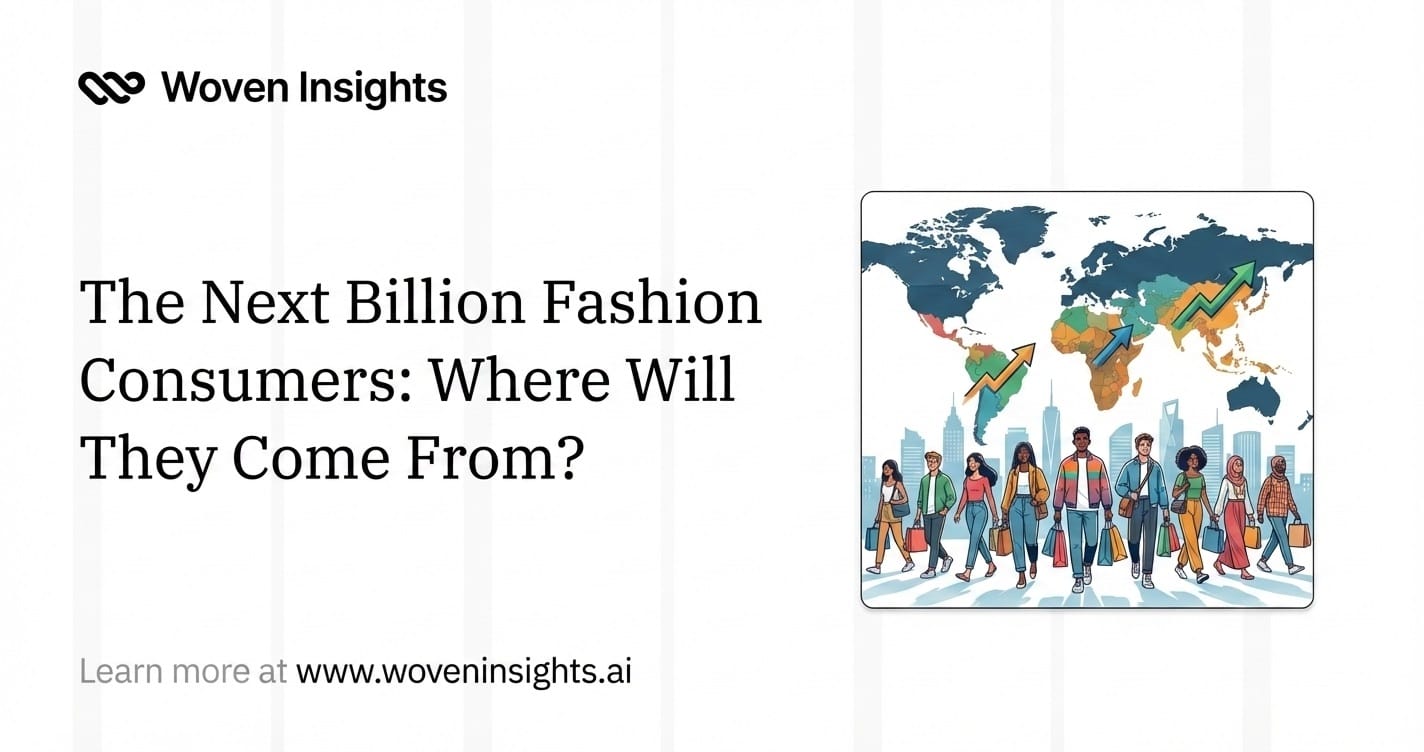
The global fashion industry has long been shaped by demand from North America and Western Europe. However, future growth will not come from the same places that drove the last decades of expansion. As mature markets slow and consumer behaviour shifts, fashion brands are increasingly asking a critical question: where will the next billion fashion consumers come from?
The answer lies in a combination of emerging markets, demographic change, digital access, and evolving lifestyles. Understanding where new consumers are entering the fashion economy, and what motivates them, is essential for brands that want to grow sustainably over the next decade.
Why Traditional Growth Markets Are Reaching Saturation
In established markets, fashion consumption is changing rather than expanding. Many consumers already own more clothing than they need, and spending growth is constrained by factors such as inflation, sustainability concerns, and changing attitudes toward fast fashion.
Brands are seeing:
- Slower volume growth
- Higher competition for the same customer base
- Increased sensitivity to price and value
- Stronger demand for quality, durability, and versatility
As a result, growth strategies increasingly depend on finding new consumers rather than selling more to the same ones.
Emerging Economies as the Primary Growth Engine
The next wave of fashion consumers will largely come from emerging economies where population growth, urbanisation, and rising incomes are expanding access to discretionary spending.
Key drivers include:
- Rapid urban development creating new retail hubs
- Expansion of the middle-income population
- Increased participation of younger consumers in the workforce
- Growing exposure to global fashion through digital platforms
These markets are not simply replicating Western consumption patterns. They are developing distinct preferences shaped by culture, climate, and local values.
Africa’s Growing Consumer Base
Africa represents one of the most significant long-term growth opportunities for fashion. A young population, increasing mobile connectivity, and a strong culture of self-expression are reshaping how fashion is consumed across the continent.
Key characteristics include:
- Strong demand for occasion wear and expressive styles
- High influence of local designers and tailors
- Blending of traditional aesthetics with global trends
- Rapid growth of social commerce and informal retail
For global brands, success in Africa requires localisation rather than standardisation.
South and Southeast Asia’s Expanding Middle Class
Countries across South and Southeast Asia are seeing a steady expansion of fashion-conscious consumers who are increasingly brand-aware and digitally connected.
Growth in these regions is driven by:
- Rising disposable incomes
- A large, young consumer base
- Strong social media influence on purchasing decisions
- Growing interest in both global and regional brands
These consumers often move fluidly between value-driven purchases and aspirational fashion, creating opportunities across multiple price segments.
The Middle East’s Evolving Fashion Landscape
The Middle East continues to play a growing role in global fashion consumption, driven by urbanisation, tourism, and a strong appetite for premium and luxury fashion.
Notable dynamics include:
- High spending power in key cities
- Strong demand for modest fashion and occasion wear
- A growing local designer ecosystem
- Rapid adoption of digital retail and social commerce
Fashion in this region is closely tied to identity, culture, and status, making storytelling and brand alignment especially important.
Digital Access as the Gateway to New Consumers
Many of the next billion fashion consumers will not enter through physical stores. They will enter through smartphones.
Digital access enables:
- Discovery of global brands via social platforms
- Participation in trends without traditional retail infrastructure
- Growth of mobile-first and social commerce models
- Influence from creators rather than traditional advertising
This shift lowers barriers to entry for consumers and allows brands to reach markets that were previously inaccessible.
New Consumers, Different Expectations
The next generation of fashion consumers does not share identical expectations with previous ones. Data shows growing emphasis on:
- Value and versatility
- Cultural relevance
- Comfort and functionality
- Ethical and environmental considerations
- Authentic brand behaviour
Brands that apply one-size-fits-all strategies risk missing these nuances.
Why Data Is Critical to Reaching the Next Billion
Entering new markets without data increases risk. Consumer behaviour varies widely by region, climate, income level, and cultural norms.
Market intelligence helps brands:
- Identify where demand is emerging
- Understand category-level opportunities
- Adapt assortments to local preferences
- Avoid overinvestment in unsuitable styles
- Monitor competitor strategies in new regions
Data enables brands to grow intentionally rather than opportunistically.
Implications for Fashion Brands and Retailers
To capture the next billion fashion consumers, brands must rethink traditional growth models.
This includes:
- Investing in regional market intelligence
- Building flexible supply chains
- Developing localised assortments
- Partnering with regional creators and platforms
- Using data to guide expansion decisions
Growth will not come from copying past successes but from understanding new consumers on their own terms.
Conclusion
The next billion fashion consumers will come from regions that are still underrepresented in global fashion narratives but central to its future growth. Emerging markets, digital access, and younger demographics are reshaping where and how fashion demand is created.
Brands that invest early in understanding these consumers through data, cultural insight, and local relevance will be best positioned to grow. Those that rely solely on legacy markets and familiar strategies risk being left behind as the fashion landscape continues to evolve.
About Woveninsights
Woveninsights is a comprehensive market analytics solution that provides fashion brands with real-time access to retail market and consumer insights, sourced from over 70 million real shoppers and 20 million analyzed fashion products. Our platform helps brands track market trends, assess competitor performance, and refine product strategies with precision.
Woveninsights provides you with all the actionable data you need to create fashion products that are truly market-ready and consumer-aligned.
Click on the Book a demo button below to get started today.
