What Is Pricing Analysis and Why It Matters for Fashion Businesses

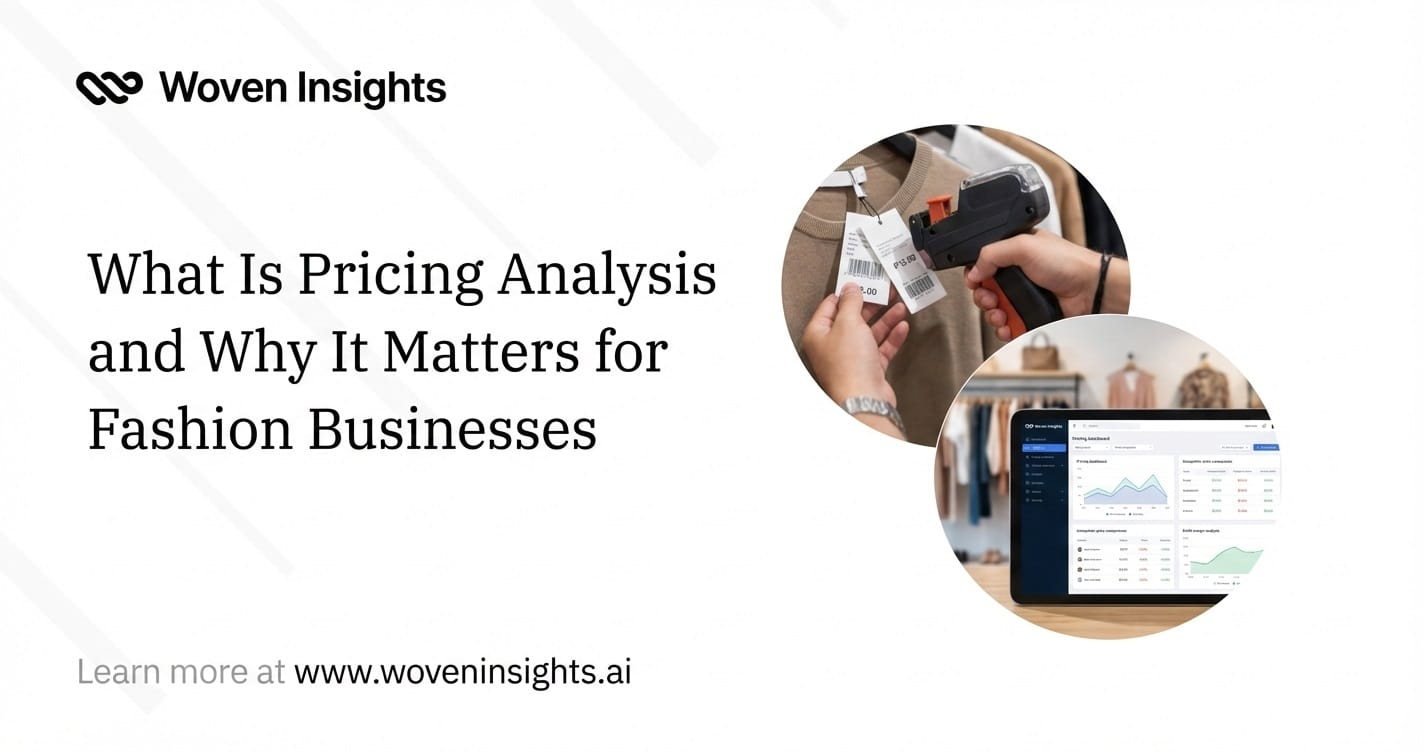
Pricing is one of the most powerful yet misunderstood levers in fashion. While design, branding, and marketing receive significant attention, pricing decisions often rely on instinct, historical benchmarks, or competitor imitation. In an industry defined by short product lifecycles and volatile demand, this approach creates unnecessary risk.
Pricing analysis provides fashion businesses with a structured way to understand how price influences demand, perception, and profitability across categories, regions, and consumer segments.
Rather than asking “What should this item cost?”, pricing analysis asks a more strategic question: What price will the market accept, and why?
What Pricing Analysis Means in a Fashion Context
Pricing analysis is the process of evaluating how different price points affect consumer demand, conversion, sell-through, and margins.
In fashion, this analysis goes beyond cost and markup formulas. It considers:
- How shoppers perceive value across similar styles
- Where demand accelerates or drops at specific price levels
- How pricing aligns with brand positioning
- How competitors price comparable items within the same category
Fashion pricing is not static. Consumer expectations change rapidly based on trends, economic conditions, and category saturation. Pricing analysis helps brands stay aligned with these shifts.
Why Pricing Is Especially Complex in Fashion
Fashion products are emotionally driven purchases. Two visually similar items can perform very differently based solely on perceived value and price positioning.
Pricing complexity increases due to:
- Short trend cycles and seasonality
- High product variety across colors, fits, and features
- Frequent promotions and markdowns
- Regional differences in willingness to pay
Without pricing analysis, fashion businesses often fall into reactive patterns, adjusting prices only after sell-through declines or inventory builds up.
The Risks of Poor Pricing Decisions
When pricing decisions lack data-backed insight, the consequences appear quickly.
Common risks include:
- Underpricing products that could command higher margins
- Overpricing items and missing early demand
- Excessive discounting to correct slow sales
- Inconsistent pricing across similar SKUs
Over time, these issues erode profitability and weaken brand credibility.
Key Components of Pricing Analysis for Fashion Businesses
Effective pricing analysis typically examines multiple dimensions simultaneously:
Price Sensitivity
Understanding how changes in price impact demand volume helps businesses identify optimal pricing ranges rather than fixed numbers.
Competitive Price Positioning
Comparing similar products across brands reveals whether items are positioned as premium, mid-market, or value-driven.
Category and Attribute-Level Pricing
Pricing analysis becomes more powerful when broken down by category, fabric, fit, and feature combinations, rather than applied at a brand-wide level.
Promotional Impact
Analyzing how discounts affect sell-through versus margin helps determine when promotions drive real demand versus temporary volume spikes.
Pricing Analysis vs Cost-Based Pricing
Traditional cost-based pricing focuses on internal profitability targets. While necessary, it ignores market reality.
Pricing analysis complements cost-based pricing by introducing:
- External demand signals
- Consumer value perception
- Competitive context
A product can meet margin targets and still fail if its price does not align with market expectations.
Why Pricing Analysis Is Becoming Essential, Not Optional
Fashion markets are becoming more transparent. Consumers compare prices instantly across platforms, regions, and brands.
This environment makes intuition-based pricing increasingly risky. Pricing analysis allows fashion businesses to:
- Reduce unnecessary markdowns
- Protect margin without sacrificing demand
- Launch products with greater confidence
- Adapt pricing strategies as trends evolve
Conclusion
Pricing analysis transforms pricing from a reactive adjustment into a strategic capability.
For fashion businesses, it provides clarity in an environment shaped by rapid change, emotional purchasing behavior, and intense competition. By understanding how price interacts with demand, perception, and performance, brands gain control over one of their most critical business decisions.
Future articles can build on this foundation by exploring how pricing analysis is applied in practice across fashion brands and retail environments.
About Woveninsights
Woveninsights is a comprehensive market analytics solution that provides fashion brands with real-time access to retail market and consumer insights, sourced from over 70 million real shoppers and 20 million analyzed fashion products. Our platform helps brands track market trends, assess competitor performance, and refine product strategies with precision.
Woveninsights provides you with all the actionable data you need to create fashion products that are truly market-ready and consumer-aligned.
Click on the Book a demo button below to get started today.
